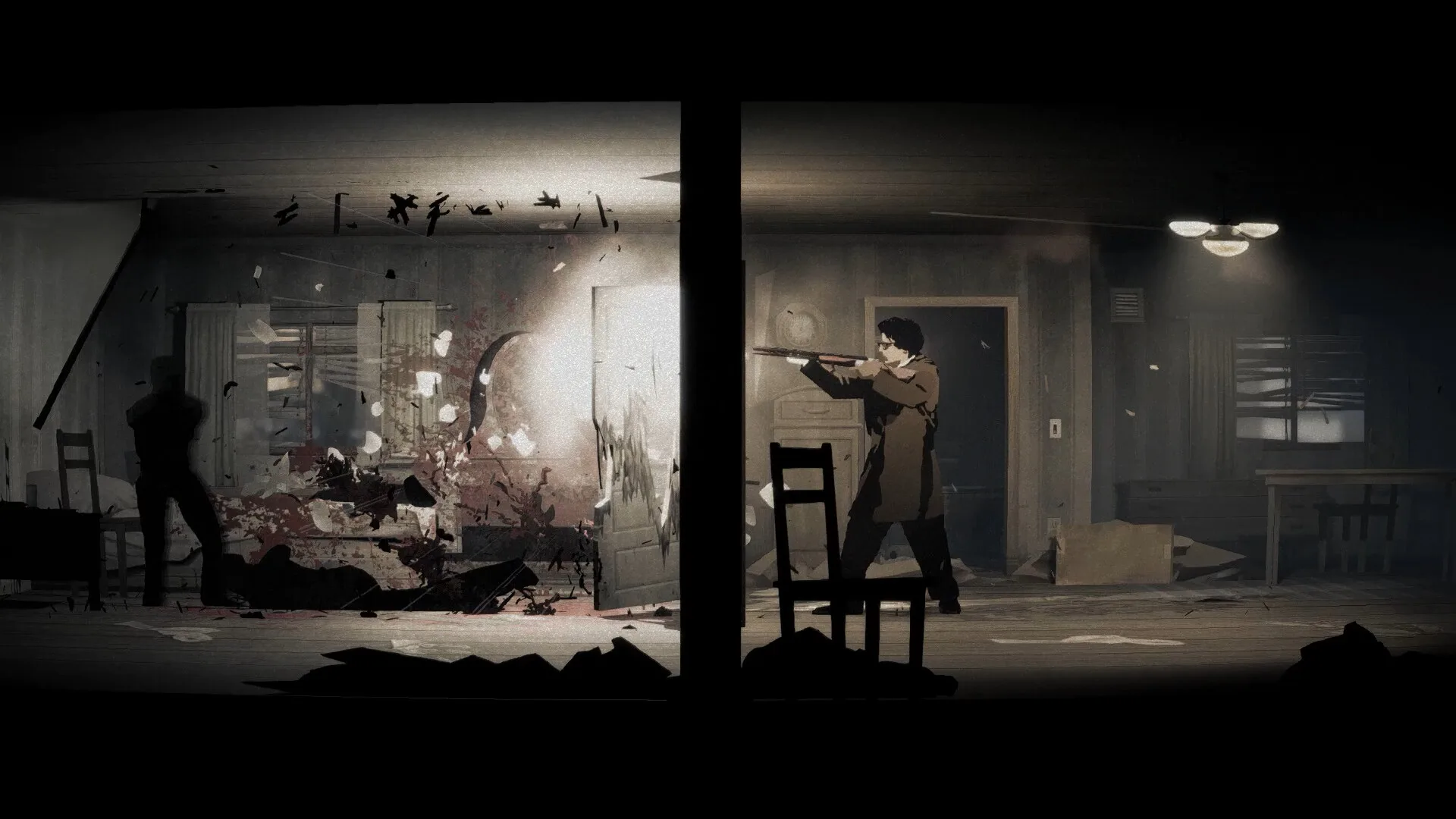
- Silver Pines review verdict: an unsettling survival horror mash-up of Alan Wake and Silent Hill.
- Setting: 1993, the storm-battered town of Silverpine, played as PI Detective Red Walker.
- Core systems: camera-based mapping, herb-mixing healing, and coin-based saves via payphones.
- Biggest strength: creeping dread and deliberate pacing over constant jump scares.
- Watch out: saving costs $8 per payphone call, so resource discipline matters early.
Silver Pines Review: First Impressions & Atmosphere
Silver Pines, developed by White Elm and published by Team17 (also known for publishing the WWI survival horror Conscript), immediately invites comparisons to Alan Wake and Silent Hill. That mash-up description is incomplete but far from a criticism: the game leans on fog-drenched pines, a mysteriously vacant town, and a dreamlike monologue from its protagonist to build slow-burn tension rather than instant terror.
You play as private investigator Detective Red Walker, who wakes alone in the locked Miner Diner in the town of Silverpine in 1993, as a horrific storm approaches and an evacuation order echoes over the radio. Walker is hired by an unnamed, unbothered client to find a missing musician named Eddie Velvet — and Walker's own confusion about the job only deepens the mystery.
Video Highlights:
- Hands-on preview covering the opening hours, from the Miner Diner to the ferry
- Full breakdown of the ceiling worm boss fight and enemy design philosophy
- Detailed look at payphone saves, vending machines, and the instant camera mapping tool
| Atmosphere Element | What to Expect | Rating |
|---|---|---|
| Sound design | Off-kilter ambient noise, dissonant NPC dialogue | ★★★★★ |
| Visual palette | Washed-out world, color-coded points of interest | ★★★★☆ |
| Pacing | Slow dread, delayed payoffs | ★★★★★ |
| Town setting | Vacant 1993 Silverpine, looming storm | ★★★★★ |
The washed-out color palette is functional, not just stylistic. Payphones, key buildings, and interactable objects pop with color — scan each area for saturated hues before moving on.
Story & Characters: The Eddie Velvet Case
The narrative hook is deceptively simple: an out-of-town PI, a missing musician, and a client who seems to know more than he lets on. Walker's phone calls with this anonymous masculine voice are strange — the client calmly prompts Walker with reminders about who he's looking for and where to go next (the Crimson Bear Motel), almost as if he expects Walker's unsteadiness.
Key story beats in the preview portion include:
- Finding Eddie Velvet's gun in his motel room, along with his signature guitar and a half-ripped photo of a blonde woman — but no Eddie
- A deeply dissonant conversation with a crying woman in Room 3 who, when phoned, is cheerful and unbothered; she trades a gun safe code (6671) for a drink with Walker
- Suspicious bloody bags of meat behind the general store
- A ferryman keeping watch for stragglers who urges you to leave before the storm hits
| Character | Role | Notable Detail |
|---|---|---|
| Detective Red Walker | Player character, PI | Confused about his own case; resembles a bespectacled James Sunderland |
| Eddie Velvet | Missing musician | Target of the investigation; leaves guitar, gun, and photo behind |
| The Client | Mysterious voice | Unnamed, calm, prompts Walker's every step |
| Woman in Room 3 | Motel guest | Cries when heard in person, cheerful on the phone |
| The Ferryman | Straggler watcher | Warns you to evacuate before the storm |
There is plenty of room for interpretation in Silver Pines' story. We're deliberately avoiding story theories here so your first playthrough stays unspoiled — the ambiguity is part of the experience.
Gameplay & Combat Systems
Exploration Tools
From the trunk of Walker's car you retrieve his PI license, a case file on Eddie Velvet, and an instant camera — one of the game's smartest mechanics. Photograph any spot and it's pinned to your map, creating personal reminders for obstacles or out-of-reach items you need to revisit.
| Tool | Function | Value |
|---|---|---|
| Instant camera | Pins photo reminders to the map | Essential for backtracking |
| Healing herbs + bottles | Mix your own healing items | Learned in the pharmacy |
| Box cutter | Weak melee weapon, cuts tarp-locked doors | First weapon, limited use |
| Coins ($) | Saves, lore newspapers, vending items | Core consumable currency |
| Gun | Found in Eddie Velvet's motel room | Ammo bought via vending machines |
Combat & Threats
Early enemies are shadow people — barely legible silhouettes whose texture and form you can't quite parse. This vagueness is a deliberate design strength: you fill in the horror yourself. Enemies can and will follow you through doors, and their attacks interact with the environment, smashing furniture, glass, and radios around you.
The motel escalates things with multiple shadows at once plus leaping face-hugger-style creatures that die in one knife swing but can overwhelm in groups. The preview's first boss — a giant ceiling worm in a suddenly blood-red tunnel — strikes a good difficulty balance: not overwhelming, not a standard encounter, and very likely a transformed person.
Enemies follow you through doors. Never assume a closed door behind you means safety — plan your escape route before engaging.
Resource Management & Saving Guide
Silver Pines ties saving directly to resources: each payphone save costs $8. The same coins feed newspaper boxes (lore) and vending machines (health tonics, bullets). On Normal difficulty, careful players should manage fine, but wasteful saving can bite you.
Scout Before Spending
Explore an area fully before saving at a payphone. Photo-pin locked doors and unreachable items instead of backtracking later.
Stock Healing Supplies
Learn herb mixing at the pharmacy early and keep mixed bottles ready before the Crimson Bear Motel.
Save at Milestones
Reserve payphone saves for major progress points — after bosses, before new areas — not after every room.
Use Vending Machines Strategically
Spend surplus coins on bullets before tough fights, tonics before exploration-heavy stretches.
The ceiling worm boss killed us on the first attempt too — round two is very winnable. Watch its pattern, keep moving, and don't burn all your ammo in the opening exchange.
Verdict & Preview Checklist
Strengths
- Exceptional creeping dread
- Smart camera-map mechanic
- Memorable enemy ambiguity
- Strong 1993 small-town setting
Drawbacks
- Save system punishes casual players
- Melee starts weak (box cutter)
- Story ambiguity may frustrate some
For Fans Of
- Alan Wake
- Silent Hill
- Classic survival horror resource tension
- Team17's Conscript
Bottom line: Silver Pines is a very unsettling and enjoyable experience steeped in creeping dread. If the full release sustains this pacing, atmosphere, and resource tension, it's one to watch closely for survival horror fans.
Preview Progression Milestones:
- Escape the Miner Diner and take the client's call
- Collect camera, license, and Eddie Velvet file from the car
- Get the underpass key from the pharmacy
- Find the motel key and defeat the ceiling worm
- Pet the ticket booth cat and reach the ferry
FAQ
Q: Is Silver Pines worth playing based on this review?
Yes, if you enjoy slow-burn survival horror. Our Silver Pines review found the preview unsettling in the best way, with strong atmosphere, smart mechanics like the camera mapping tool, and tense resource management reminiscent of Silent Hill and Alan Wake.
Q: Who develops and publishes Silver Pines?
Silver Pines is developed by White Elm and published by Team17, the publisher also known for Conscript, a World War I survival horror title.
Q: How does saving work in Silver Pines?
Saves are made at payphones and cost $8 in coins, making saving a consumable resource. The same coins can be spent on lore newspapers and vending machine items like health tonics and bullets.
Q: How hard is the first boss in Silver Pines?
The ceiling worm boss in the red-lit tunnel is moderately challenging — it may down you on a first attempt, but it's learnable on a second try and sits at a reasonable difficulty for a first boss.